Guess what?
I have a shiny new website for your hungry eyes to behold.
From now on, all the blog posts will be right over here at She Who Writes Monsters. Please go ahead and follow the blog. There's plenty of juicy stuff for you.
The website's basic functions are up and running, but there will be lots of content added within the next few weeks. Not to mention I've got a line on a blog tour in late October, so please share this webpage with your friends.
Thanks!
Showing posts with label writing. Show all posts
Showing posts with label writing. Show all posts
Saturday, September 28, 2013

Tuesday, September 17, 2013
Things The Legend of Korra Taught Me About Writing

Do you hear that? It's the sound of The Legend of Korra being back on the air with new episodes. And, subsequently, my high-pitched fangirl screaming.
So to celebrate my favorite hard-headed Avatar returning to the air waves, here's some things that LoK has taught me about writing.
1. You can't please everyone. Well, if you follow me on Tumblr, you know what I'm about to dive into. After the hour long premiere of Korra last Friday, I excitedly hopped onto Tumblr and entered the Legend of Korra tag in order to reblog my guts out in excitement. However, when I arrived, I found that nearly the entire tag was filled to the brim with negative comments. I was stupefied. In my opinion, it was a fair premiere--nothing more, nothing less. I couldn't understand how it seemed like half the fandom absolutely hated it, and for some pretty petty and perhaps trigger-happy reasons. It kept getting worse the more and more I scrolled down until I finally got pissed off and did something I soon regretted. I made a post saying that the premiere was better than no premiere at all. Albeit, I was being sarcastic. Boy, howdy. The post reached over 1,000 notes within an hour. Half of them agreed with me. The other half vehemently did not. I received at least five angry Anon messages in my Inbox. I lost eight followers overnight. So. What did I learn?
Writing is subjective. If you wanted to get down to bare bones, there probably is not definitive way to decide what is "good" and "bad" writing. All we can do is weigh in and see what the general consensus is. As a result, it's impossible to write something that makes literally everyone happy. You could ask every single person on this planet what they like and try to incorporate that into the end all, be all novel...and someone would still hate it. Because we're human. Because we're flawed.
Did the Korra premiere have issues? Hell yeah. All over the place. But it's clear--at least to me, if no one else--that the writers/animators/directors actually care about the characters and the storyline and they made the best story they felt they could based on the direction the series is going. In order for Korra not to be a retread of ATLA, they are taking more risks and diverting from the source material. In some ways, it works. In others, it doesn't. This is something that every writer--myself included--will face whenever they put ink on the paper. Someone's going to disagree with you. Someone's going to hate you and your work. But it's part of the job. We aren't here to be liked. We're here to art, and art hard.
2. Pacing can make or break you. Now it's time to travel back through time to the first season of Korra. I liked the first season. It had some truly gorgeous fight scenes, one hell of a creepy villain, and some excellent characters to explore. However, the one complaint that nearly everyone has brought up is the pacing. Sadly, LoK started out as just a mini-series. They had absolutely no indication or promise that it would make it past twelve episodes. As a result, the writers had to cram an entire season's worth of story into half a season's worth of episodes. This meant taking huge shortcuts with plot elements, character interactions, and overall story arcs.
This unfortunate drawback imparted an important detail to me: know the length and duration of your story beforehand, if at all possible. Some writers do this very well. Jim Butcher, for instance, does an excellent job with stringing together elements from the first Harry Dresden novel all the way to the latest one. Some writers struggle with it. The writers of Supernatural, for instance, are great at bringing back certain minor characters, but they massively abuse it by simply bringing them back to bump them off, or completely forgetting a major recurring character entirely because of whatever reason. (*cough* ADAM *cough, hacks up a bloody lung and cries because at least it's not burning in hell like Adam*)
Pacing is just as important as any other threads that hold a story together. It's important that things happen naturally, even if their nature is something irregular or bold. The story needs to have plot points that are organic, and the characters' actions should reflect such accordingly, or you'll give your audience a massive case of whiplash. You don't want to do that. Medical bills are expensive.
3. Memorable characters can make your story soar. Okay, so it's no secret that I like Korra. She's ballsy and awkward and headstrong. I also like Mako, despite the fact that over half the fandom hates his guts. Whatever. But you know who will always stick out in my mind as a great character? Lin frickin ' Bei Fong. This is yet another aspect that the writers of ATLA and LoK are really good at--developing side characters and making you love them. As a reader, you usually expect to like or want to follow your main protagonist, but I've noticed that good writers can also write great supportive characters. I'll give two examples for science reasons: Waldo Butters from the Dresden Files and Jason Schulyer from the Anita Blake novels.
Alright, shut up, it's time to talk about the Dresden Files. If you're not reading them, hold out your hand so I can smack the back of it. If you are, please email me with all your feelings about Cold Days. I need to share. Anyway, Waldo Butters is by far one of my favorite characters in the novel series, and that's saying a lot considering I am 1000% head-over-heels in love with Harry. Butters was introduced in Death Masks and later received supportive character status in Dead Beat. This was easily one of the best decisions Butcher made. He is a wonderful offbeat character who started out as an awkward dorky guy who didn't have much courage, and then turned into this hilarious, quirky friend of Harry's. There is nothing I love more than to trip over a character and fall in love with them like a cheesy rom-com.
Jason Schulyer, however, won me over basically the first time he was introduced in The Lunatic Cafe. I mean, let me describe his character: he's a male stripper whose stage name is Ripley (yes, as in Ripley from the Alien movies), he's a werewolf who spends his nights feeding his blood to his vampire master, he's bisexual, and he's a total lecherous pervert with a noble streak. I mean, come on. Doesn't he sound like he should be the actual protagonist of the novel series? The point I want to make about Jason is that he is so entertaining that I actually kept reading the Anita Blake novels specifically for him after the series went in the crapper after the infamous Narcissus in Chains. It is completely absurd that I liked him so much that I would put up with the purple prose, horrible sex scenes, misogyny, and general unpleasantness that is Cerulean Sins and Blood Noir, but it still happened anyway.
To circle back around to my point, The Legend of Korra did exactly that--it gave me an extra reason to tune back into the story for season two. Anytime a reader finds more help to love your series, that's an achievement. For example, my editor told me that a minor character from The Black Parade made her laugh so hard that she hopes he reappears someday. I had no intention of ever bringing him back, as he was just a one-off villain, but thanks to her, he might show his face again. Details like a well-rounded cast of characters can be that boost to an author's reputation that they never knew they needed.
Well, I think I've gushed enough. If you're curious, The Legend of Korra premieres Fridays at 7:00pm EST on Nickelodeon. Join us. WE ARE LEGION.
*waves hands, whispers* Water tribe.
Tuesday, September 3, 2013
Things 50 Shades of Grey Taught Me About Writing

I
know what you’re thinking. I mean, seriously, what the hell could one of the
all time worst novels ever written have to teach a young author?
Actually
quite a lot.
So
in light of the stupid controversy surrounding this godawful atrocity getting a
film adaptation, let’s take a look at all the wonderful things E.L. James has
left with me.
1.
Unfortunately,
nice guys really do finish last (in fiction). I hate to admit it (mostly
because I am technically a nice guy even though I’m a girl with inner rage
issues), but it’s the truth. Most of the time, when there’s a love triangle
present, the girl chooses the bad boy. We’ve seen it dozens of times in
fiction. There is
just something about the classic jerk boyfriend character that us poor women
cannot resist. There is no real explanation for it other than perhaps a hard
study of human biology. Maybe it’s because we inherently obsess with people who
seem to not like us. I know I do. It’s annoying, like a splinter in your
finger, a tiny pebble in your shoe. It irks you. And, eventually, overwhelms
you. My second crush in high school was a guy who got on my nerves constantly and
we ended up verbally sparring through my third year and then I was walking down
the hallway one day, fuming at something he’d teased me about earlier, and then
it hit me like a Mack truck spinning out of control on an oil slick—I LIKED
him. Ew. Boys, right?
But despite the billions of things E.L. James got wrong,
she knew that the foaming masses of women out there prefer the handsome,
arrogant prick over someone much more understanding and level-headed to
fantasize about. I think it has a lot to do with fantasies in general. We often
indulge in them because we know that in real life, they’d be horrific
experiences. If Christian and Ana were a real couple and people knew about what
he did to her, he’d be on 'To Catch a Predator' in a heartbeat. No amount of
money would avoid that. However, that brings me to my next point.
2.
Jerk
boyfriends aren’t enough. We love jerks. We adore them. Indiana Jones, Tony
Stark, John McClane, Richard B. Riddick, Hellboy, the list goes on and on, and that’s just for
movies. In fiction, there are thousands of arrogant pricks that we can’t help
rooting for as we turn the pages. However, these fellas have something in
common that Christian Grey does NOT: they have hidden depths. This is a trope
known as Jerk with a Heart of Gold. It’s by far one of the most popular writing
devices of all time. There is really nothing better than thinking a character
is the scum of the earth and then finding out he has a kitten farm out in his
garage. And this is the exact opposite of Mr. Grey, who is a Jerk with a Heart of Jerk. He’s intolerable, abusive, childish, selfish, and just a genuinely
unpleasant man despite his dashing good looks. While this worked for all the
lonely housewives still pining for Edward Cullen, it is the main reason that 50
Shades is one of the most hated novel series to date. His behavior is wholly
disgusting. It’s reprehensible. It is not accurate in any sense to the real
life equivalents of couples in the BDSM culture. It’s made up and creepy and
wrong and honestly, it makes the human race as a whole look bad. Okay, I may be
exaggerating, but still.
50 Shades is indisputable proof that bastard
boyfriends cannot cut it in the fictional world. Sure, the book sold millions, but
again, the demographic generally isn’t writers or readers with their heads on straight, it’s people who don’t read on a
regular basis and so they don’t know the difference between a well-balanced
story with troubled but great characters and the mindless wet dreams of a
lonely woman who thinks she knows what S & M is all about.
3.
Fanfiction
really shouldn’t be renamed and published for profit. Sadly, not a lot of
people know that Shades is actually an AU (alternate universe, for you
non-nerds out there) fanfiction written about Twilight. Oh, yes, you read that
right. It’s Twilight fanfiction. All she did was change the names, a few plot
details, and then she published it and made a fortune. Did she have the legal
right to do this? Yes. Was it morally right to do this? I disagree. I write
fanfiction on a regular basis. It’s a great way to find other creative people
and to share an interest in a particular movie, cartoon, TV show, anime/manga, or novel.
However, there is one huge difference between that and original fiction—it’s
free. That’s why fanfiction is such a booming part of nerd culture. If you hate
something, who cares? At least you didn’t cough up any cash for it. You read it
for free. That’s also why they are ten times more willing to review a fanfic
than to review a novel on Amazon—it’s way less pressure and cost to do so.
I
believe it’s wrong to charge people to read something many of them could have
read for free, especially when the quality is as eye-ball gougingly terrible as
Shades. However, James is not the only one to abuse this literary loophole.
Cassandra Clare, author of the City of Bones novel series, also did the same
thing, and she is an even worse offender. According to the research I’ve
gathered, she used to plagiarize a lot of the Harry Potter fanfiction she used
to write and then eventually took it down, changed the plot and the names, and
published it. She also reportedly bullied anyone who tried to point out what
she was doing, and if you Google the controversy right now, you’ll notice it’s
kind of hard to find. I believe that her publisher might have found out about
it and made a point to keep things on the down low, and that’s a frightening
idea in itself.
However, for argument’s sake, let’s now focus on the writing
aspect of this problem. You’re borrowing someone else’s characters. You’re
piggybacking off of them. You’re adding and subtracting some things, but it’s
still not original fiction. This is going to hurt your writing no matter how
you try to dress it up. It’s still not your property and you will have to make
all kinds of sacrifices in order to make it work without alerting someone to
the fact that you’ve stolen their characters. You can see so many awful Bella
Swan-isms in Ana Steele that it’s embarrassing—tripping over things, rejecting
compliments and gifts, being sullen for no real reason, not noticing that the
guy she loves is a total creep—and that’s just for starters. I hope that in the
future publishing companies take a harder look at the authors who keep doing
stuff like this and refuse to let it fly. It’s not fair to the millions of
fanfic writers who don’t plagiarize and it’s not fair to the readers.
4.
Conflict
matters. Honestly, can you look me in the eye and tell me what Shades is about
other than poorly written sex? I bet you a nickel that you can’t. Story cannot
exist without conflict. Yet Shades does, somehow. The initial attempt at conflict
is Ana’s reluctance to engage in Christian’s disturbing sex fantasies, but it’s
null and void before we even hit the halfway point in the first book. The rest
of it just drags along with a bare semblance of a plot. Putting aside the
fourth grade reading level grammar mistakes, it’s just dull scenes loosely
strung together. Plot matters. Conflict matters. Character actions matter.
There shouldn’t be any point that I flip through a book and I can’t tell what
the hell is happening and for what reason.
5.
Editing
is your friend. How many times does Christian “breathe” in Shades? How many
times does Ana say “holy cow?” I think some lovely person went and counted them
all, but you and I both know the exact number comes out to 84545695685067986879
because E.L. James didn’t have an editor. Or, if she did, the editor was too
busy typing with one hand to actually do their job. The novel has so much
unintentional repetition that it makes me want to spoon my eyes out of their
sockets. No one “says” anything—it’s all attributions, which are a big debate
in the writing world. I personally think that it should be 50/50 when it comes
to dialogue tags, but most writers are strict and enforce the law that it
should be “said” 90% of the time.
Editing is not just a masochistic way for you
to kill your darlings on the page. It’s good for your work. It helps you
separate the crap from the gold. It helps you catch accidental mistakes and
things you repeat without knowing it, especially if you’re a novelist. Editing
should also be something that happens dozens of times before one even considers
publishing. Not only do I look over my work, I pass it off to relatives and
friends and then to a professional. Your eyes see what you wanted to write, and
don’t always see what’s there. You have to edit until the very sight of your
manuscript makes you want to puke. It’s despicable, but necessary.
Honestly,
I could go on and on about how much I loathe these novels, but at the very
least, they have given us some of the funniest dramatic readings of all time.
Here’s to you, 50 Shades of Grey. You make us all look bad, but at least you
suck in style.
...no pun intended.
Wednesday, August 21, 2013
Little Lost Babou

So I rescued a little orange kitten today.
My friend and I wanted to hit the park because we didn't want to go to the movies or dinner because that's what we always do, so we headed to this place called Rainbow Springs. We were supposed to go tubing, but as bad luck would have it, the moment we got there, a thunderstorm brewed. We decided to try swimming instead so we stayed in the car and waited out the storm for about half an hour. The rain slowed down and we got out and started walking towards where we thought the springs were.
Along the path, we both heard this peculiar mewling from the bushes. I stooped and looked under a bush and found a tiny kitten no more than a month or two old hiding under a leaf. I knelt and beckoned him and he came right over to me without any hesitation, which led me to believe that he might have been abandoned, or got separated from his mother. Most feral/stray cats and kittens aren't that friendly, so I figured we could take him to a shelter and he'd get adopted quickly. After all, he didn't have any visible injuries or diseases (trust me, I took enough classes as pre-vet to know) and so we took him back up the path to the car. We then get in the car and Google the nearest shelter.
We get to the shelter. We read the sign out front. It says they are at capacity and cannot shelter any more cats or kittens. But thankfully, a girl inside hands us a flyer to another shelter. We call this shelter. They close at 5:30pm. It is 5:15pm at the time of the phone call and the shelter is over ten miles away. We beg the lady to please stay open and haul ass across town. I call the shelter a SECOND time and tell them we are up the street and not to lock us out because there is no other shelter in the entire city that is open and neither of us have the experience to take care of a month old kitten. We get there at 5:35pm.
The gate is closed.
The phone goes straight to voicemail.
And we are left sitting in a car in the rain with a little kitten with no home.
Why am I writing about this at two am? Well, this seemingly wretched experience reminded me of why I'm an author in the first place.
I know a lot of people who would have heard the kitten and simply kept walking. Maybe they'd coo, "Aw, poor thing. I hope his Mama finds him." There's nothing wrong with that. It would have saved an entire two hours of hair-tearing frustration as my friend and I then had to drive to a Publix, buy a bottle and baby formula for the kitten who was mewling his head off to be fed, and then call around our friends to find someone to take him. I would have done it myself if I lived alone, but I don't.
However, I believe that it is my job to help those who can't help themselves, even in a matter as small as a stray kitten. Actually, saving a stray animal was on my bucket list and while this afternoon was by far one of the most frustrating days of my life, I'm still glad I did it. Call me pretentious, but it reminds me of a quote from Castle when Rick told Beckett, "You're the one who honors the victims." I think that because I am just a skinny, awkward, nerdy girl without that many accomplishments, I should still do good wherever I can. I don't expect to be rewarded. I don't expect to be praised, hell, I don't deserve it. But I think being a writer means doing the right thing both on the pages and outside of them. I would never have gotten to sleep tonight if I had left that kitten--we dubbed him "Babou" after the ocelot from Archer because he was a fox-eared asshole, cute though he was--in the rain by himself, crying for his mother. There isn't much I can do in this life that will make a difference. I'll probably live an ordinary life. I'll probably die an ordinary death. But it's moments like the ones with Babou that remind me of why I write stories. Conflict isn't always on a grand scale. Sometimes life is made of tiny battles with few rewards, and some that don't seem substantial.
But it's two in the morning and I'm smiling because one little kitten is safe inside and warm and well-fed, and it happened because my friend and I were at the wrong place at the wrong time.
If that's not good writing, what is?
Sunday, August 18, 2013
Things Avatar: The Last Airbender Taught Me About Writing

Have
you seen this show? If you have, high-five. If you haven’t, hold up your left
hand, extend your first finger, and jab yourself in the eye. Hard. After you
see the eye doctor and he okays your vision, then go out and buy the DVDs. It’s
that good.
And
in honor of the announcement that its sequel, The Legend of Korra, is returning
to the air September 13, 2013 at 7:00pm EST (so what if I wrote it on the
calendar, DON’T JUDGE ME), I will spend a minute talking about all the wondrous
things this delightful animated show has taught me.
1.
Underage
characters are just as interesting as adult characters. Anyone with
experience in reading Young Adult fiction, or who frequently watches cartoons/anime "intended" for children, has heard this tired, common complaint. Unfortunately, a
lot of folks think that just because a novel/short story/cartoon/anime stars a
child, it won’t be as good as something with a teenager or adult protagonist.
This is such pure bologna that it should be represented by Oscar Meyer.
Children are interesting. They are engrossing. They are capable of incredible
things, whether they are good or bad. Avatar: TLA knew this right out of the gate.
It introduced us to one of the most amazing spread of characters in all of
animated history. Every kid had their own personality, their own agenda, their
own beliefs, and their own dreams/goals. It is simply staggering to know that
there are seven main young characters (and that’s just the ones central to the
plot: Aang, Katara, Sokka, Toph, Zuko, Suki, and Azula) and every single one of
them develops and changes over the course of three seasons. Age only determines
the way certain things unfold within a story. It often does not limit the
spectrum or scope of things that happen. These kids still deal with all the horrible
parts of life that adults face at one time or another: violence, rage, hatred,
racism, sex, fear, faith, and that’s just for starters. The writers
(affectionately called “Bryke” for Brian Konietzko and Martin Dante DiMartino,
because both their names are a mouthful) did not treat their audience like
drooling infants. They wrote the Gaang the way all shows should hope to—with balance,
maturity, and respect.
2.
‘The Chosen One’
trope is not always a cliché. Everyone knows this trope: the “one”
who is prophesized to end a war or battle of some sort. It’s been around since
the Bible days—Jesus, Luke Skywalker (or Anakin, if you decide to believe that
the Star Wars prequels exist), Neo, Harry Potter, and John Connor are just the
ones I can rattle off the top of my head. Sometimes it can really wear on the
nerves when one character’s actions will affect an entire society, or even a
world. For instance, while I generally disagree with the massive hate over the
Matrix sequels, one of the main reasons they were disliked is because after Neo
got all his powers, he stopped being an underdog, and a normal guy in an
abnormal world. If not written properly, the Chosen One can destroy a story and
make the reader want to throw your book across the room. I hate to point
fingers (usually), but the Fallen series by Thomas E. Sniegoski also had this
problem: a bland, douchebag character who was “the Chosen One” and yet all he
did was selfishly bitch and moan, neglect his duties, and get people in his
life murdered.
However, ATLA was a refreshing change from the tired stereotypes of the Chosen One. First of all, Aang is freakin’ adorable and peppy and cheerful and wide-eyed and goofy. It’s so easy to like the kid. You’d have to actively try to hate him. His idealism is what makes him both strong and weak throughout his journey, especially his struggle to find a way to stop Firelord Ozai without killing him. The show laid bare all of Aang’s inner turmoil and expanded on everything he learned from his friends and his enemies. I think all writers should watch the show and takes notes, especially those who might consider writing a Chosen One character at some point in their careers.
Another important factor that ATLA got right was to PROVE why Aang was the Chosen One: for his skill, his love of the world and the people in it, and his ability to unite them. That can go haywire quickly. Anakin Skywalker via the Star Wars prequel had this problem in spades. Through all three movies, everyone kept talking about Anakin being the one to “balance” the Force, and yet we’re never shown why. He NEVER shows any great potential, other than the potential to whine incessantly, glower creepily at Padme, and throw temper tantrums that result in murdering lots of people. He had some Jedi skills, but not enough to warrant all that attention. ATLA avoided this and proved that there is a way to do it right.
3.
Don’t be afraid
to explore other cultures. Alright, lower your pitchforks. I’m not one of
those black writers who believes that white people are the devil. I am, however,
realistic about what’s out there in the main media. When it comes to fantasy
and science fiction genres, white characters are predominant. Often, it happens
because there are just a ton of incredibly talented writers who happen to be white. Still, there is a
stigma whispered about that minority characters/writers can’t bring home the bacon, and that’s
just not true. ATLA integrated several different cultures—Chinese, Japanese,
Hindu, Indian, Eskimo, and that’s the tip of the iceberg, hahaha I made a funny—and
still knocked it out of the park without (a) being offensive or (b)
compromising great storytelling. This is another aspect I think other writers
should make a note of for the future. Culture is what makes the world go ‘round.
At the end of the day, all writers end up talking about can boil down to how
similar or different their characters are from one another. There are beautiful and hideous
things about every culture. We should explore them, and explore them without
restraint. A character’s race should never be a deterrent. If it is well
written, it can be enjoyed by a person of any background.
4.
Women are
awesome.
I really don’t need to go on long about this one. ATLA has some of the best
female characters of all time, bar none. I mean, Toph. Just…TOPH. If you
somehow don’t worship the ground she earth-bends, then there’s always Katara,
Suki, Azula, Mai, Ty Lee, Princess Yue, June, Avatar Kyoshi…I could go on for
ages. ATLA knew how to write girls, and write them better than a hell of a lot
of other shows. Mostly because Bryke knew that girls are the same as boys—they have
emotions, thoughts, fears, and desires. There were very few stereotypes to be had and every character had a
purpose in the show. That, to me, is one of the greatest things that ATLA
accomplished in its run.
Honestly,
I could probably go on longer, but I have to stop worshipping at some point
because my knees are tired. Seriously, though, if you haven’t checked it out,
please do. It’s worth your time, believe me. I’m glad to have grown up with a
show that believed that I could handle a great story and didn’t talk down to
me. It’s something we should all have, no matter how old we are.
Kyoko
Sunday, August 11, 2013
Things Bad Movies Taught Me About Writing
So I just watched Jack Reacher last night because my parents
claimed it was alright.
It was not.
And that is an understatement.
However, it’s not like this is the first time I’ve seen a
hair-tearingly stupid movie. I have also subjected myself to A Good Day to Die
Hard and RIPD this year. Yes, yes, I should have known better, but when you’re
wrong, you’re dead wrong. Still, every horrible experience I’ve had sitting in
a theater has taught me something.
1.
Respect your audience’s time. Specifically, I am referring to
pacing a story. Jack Reacher had abysmal pacing. For instance, the first five
or six minutes of the film has absolutely no dialogue. I have seen movies where
this is effective and sets the mood. In this particular film, it felt
pretentious and exhausting. It didn’t enhance the evil nature of the bad guy
and it didn’t make the character we were introduced to seem intelligent or
quirky. It was just boring and unnecessary. Pacing means that the events of
your story glide into each other, whether it’s a romantic scene followed by a
violent scene, a violent scene followed by a humorous exchange, an action scene
followed by a quiet denouement, or any combination of different sequences. If
at any point during your movie, a non-idiotic audience member checks his/her
watch, something is deeply wrong. This is not to say that everything should be
fast and hectic—that was one of the main pitfalls Legend of the Guardians: The
Owls of Ga’Hoole—but you have to spend time on things that matter and omit things
that aren’t relevant to them.
2.
Write good characters and we can pretty much sit through
anything. Think about ten of your favorite films off the top of your head. How
many of them have premises that are absurd if explained out loud? I know plenty
of mine do. However, if you write enjoyable or relatable characters, your
audience won’t care that the plot is silly. Perfect example: Clive Owen’s
hysterical action flick Shoot ‘Em Up. About 99% of what happened in that movie
was physically impossible and ridiculous. Why did I love it? Commitment, man.
Clive Owen nailed every single one-liner with his perfect deadpan expression
and I adored his character—carrot chewing, cynicism, and all. What’s the
reverse of this effect? A great plot with horrible characters. We’ve all seen
it before. Hell, I can rattle off examples with ease: My Super Ex-Girlfriend,
Push, Jumper, The Last Stand, and the aforementioned RIPD. In my personal
opinion, those movies had plots that sounded interesting that were executed
horribly. Some of them failed for several reasons, but the common element is
unlikable characters. Jack Reacher had this problem as well. There were exactly
two types of characters: morons and douchebags. Some were a combination of both.
Terrible writing will strangle a great concept in its crib and you’ll be left
there weeping. Many writers advise to build a novel, script, or short story
from the character outward. I agree completely. We have to like the guy or gal
we’re riding piggyback with or nothing will pan out.
3.
Commit. I have an entire laundry list of awful movies that I
love with full awareness that they are awful. I am able to freely admit this
because 90% of the bad films I enjoy committed to their premise or their characters.
For instance, my number one guiltiest pleasure of all time is Hudson Hawk. No,
no, don’t close your browser yet! Let me explain. I love Hudson Hawk, if only
because everyone—and I mean, everyone—in that silly mess of a film committed to
that incomprehensible, ludicrous script of theirs. They just nailed it. No one
half-assed any of their scenes and so the movie turned into the beautiful
butterfly of horribleness as a result. To me, nothing is worse than being
mediocre or half-hearted. I’ve read plenty of books in time and the ones that
frustrate me the most are the ones that don’t commit to an idea. I try not to
name examples, but the main offender on my list is 'City of Bones'. Great
concept, great conflict, great world building, but one truly half-assed main
character. I just couldn’t get into it even though I liked Jace and Simon and
the other Shadow Hunters just fine. Clary was a loaf of Wal-mart brand bread to
me—bland, dry, and forgettable. This is not to say the books are bad. Not in
the least. I actually think the writing is quite good and I recommend them with
no remorse, but that series is something I can never get into because I feel
like the author didn’t commit to making Clary a distinct protagonist. I believe this
is possibly the most important part of the writing process—setting the main
character apart from her supporting cast and from characters outside of the
novel itself. I am the first person to slam the 'Twilight' novels, but at least
Bella Swan was her own person. True, she was a perfectly repugnant person, but
she was still an individual and no one can really replicate her. (Though E.L. James tried her damnedest.)
4.
Weak villains will kill your story. Not physically weak
villains, mind you. Villains who aren’t threatening are also something that
makes me want to kick puppies. Jack Reacher was definitely guilty of this. Mr.
Potato Head—sorry, Jai Courtney—was kind of intimidating if only for being a
cold-blooded sniper, but his “boss” was the least scary villain I’ve seen in
ages. Oh, gee, he has one blind eye and no fingers! Bring me my brown pants! Building up a good villain is one of the most important parts
to a story because otherwise, your protagonist—no matter how charming and funny
and cool—will have no dragon to slay. Winning an unwinnable war is what makes
someone a hero, whether that war is literal or not. Creating a slimy,
obsequious villain is essential to draw a line in the sand and make the stakes
as real as they can ever get. Want an example of what happens when you don't do that? The Happening. ‘Nuff said.
Luckily, 2013 is not over yet and so I have plenty more good
movies to wash the bad taste out of my mouth. Stay tuned, as I might revisit
this concept since awful films have much, much more to offer as examples of
what not to do as a writer.
Wednesday, August 7, 2013
Recent book review for The Black Parade
My lovely friend Margaret read and reviewed my book.
You should totally check it out. Some nuanced, thoughtful criticism from a great up-and-coming writer.
Wednesday, July 31, 2013
Things Christopher Nolan Taught Me About Writing

What can I say? I’ve been a fan of Batman since I was barely
out of diapers, and so of course I have mad respect for the brilliant
Christopher Nolan. And yesterday was his birthday, so the post is totally valid.
Now, calm down, I’m not going to spend this entire post
worshipping the ground he floats over. I think he’s a great writer/director,
but I don’t mean to put him on a pedestal. Today, I’m going to focus on his
methods and their effects. Pull on your capes and cowls and join me, won’t you?
1.
Respect your characters. This, above all, is what I think what
made the Nolan Batman films (and hell, The Prestige and Inception,
while we’re talking about the subject) so successful. It sounds rudimentary and
obvious, but unfortunately in today’s world, this concept is not mandatory.
Want proof? Three little words: X-Men Origins Wolverine. Did that send chills
up your spine? It should have. If you do not respect your characters, you get
things like the Merc with the Mouth getting his mouth sewn shut, one of the
most bad ass characters of all time turned into a whiny love-struck kitten,
adamantium bullets that cause frickin’ amnesia, and an entire sea of pissed off
comic book fans who swear off of your movies for life. Nolan taught me to take
my time, spread open a character, and examine them from top to bottom with a
creepy Dr. Zoidberg kind of patience. With each of the three Batman films,
Nolan paid attention to the various traits that made up Bruce Wayne, Alfred J.
Pennyworth, and an assortment of other characters from the Batman comics. He
incorporated different versions of the characters and streamlined them into the
incarnations we watched on screen. If a writer does their homework and creates
a three-dimensional character, people—in their key demographic and sometimes
beyond it—will show up. Guaranteed.
2.
The devil’s in the details. An old phrase, but a good ‘un.
Nolan’s scripts have always been filled to the brim with details. Hell, that’s
why he waited ten years before deciding to film Inception. The story is that he
kept it in a drawer for years and chipped away at it until he finally came out
with something he liked and thought would work. Details help fill in the spaces
that a writer might not notice are there. It can be dialogue, it can be
setting, it can be backstory, anything. It can also be easy to pack in too many
and lose focus, but that is something I learned as I edited my first novel.
Details and editing seem to be natural enemies, but this isn’t always the case.
For instance, think of all the little things in The Prestige that added
up over time. The story left us tiny clues that eventually congealed with the
tremendous reveal at the end of the film. It was still a lengthy running time,
but the film never felt long because the details kept us hanging on the edge of
our seats. Details should help the reader invest, keep them interested, and
move the story along.
3.
Realism is a double-edged sword. Some fiction excels because
it has the ability to take a ludicrous concept and make us believe it. This idea is one of the reasons why the Nolan Batman films broke barriers. While
Tim Burton’s version was certainly entertaining, it existed in its own bizarre
plane of existence. And don’t get me started on Joel Schumacher’s versions.
(Mind you, I enjoyed Batman Forever for all its cheesiness, but I’m not
disillusioned that it’s not really Batman. And Batman & Robin is In Name
Only.) Nolan was the first to take the hero and apply him to modern times—our
cinematography, our technology, and our current social and ethic standards. It
worked. It flourished. It made us believe that it could happen. However, this
concept cannot always be applied to every hero. It’s here that I put on my
critic hat. I thought Man of Steel was pretty good, but one of its biggest
flaws was that they took the realism concept too far. Actually, one of my
friends put it into perspective perfectly. Heard of ItsJustSomeRandomGuy? (Insert shameless Name Drop Here) His biggest criticism of
the film was that it wasn’t fun. I agree. Man of Steel was a lot of
things, but I never got the sense of fun that I feel is absolutely essential to
the character of Clark Kent. Superman is meant to inspire. He’s someone to look
up to. The realism in MoS was an admirable attempt, but it took away the wonder
that Superman should instill in the audience. He was much more cynical and
harder edged than I felt he should have been. There is a reason they call him
the Big Blue Boy Scout. I didn’t want to give him a merit badge by the end of
the movie, and that’s a crying shame. So, when writing, realism should be a
guiding light, but not the main focus. Many novelists can write realistic
characters, plots, and stories, but Nolan’s work has taught me that it doesn’t
always have to be that way. Lighten up. Fiction operates under the Willing
Suspension of Disbelief. We can accept a lot under that creed—even that a man
can fly.
4.
If you truly love your work, someone else will love it too. Now,
this is subjective. Loving your work and vanity projects are NOT the same
thing. For instance, most people agree that Zack Snyder’s Sucker Punch is
a vanity project. Loving your work means investing fully into everything in
it—cinematography, script, casting the actors, dialogue, soundtrack, all of it.
It is for this reason that Inception was such a big hit. It took a
concept that might be a bit hard for the Average Joe to accept and turned into
a terrific story that also made quite a good bit of cash. Nolan spoke in
interviews and commentary how he sat on the project for so long, and that is a
labor of love. We have all seen movies and read books that were rushed. It
steals a lot from a story if you don’t take the time to sweat, cry, and gnash
your teeth over it like a misbehaving toddler. I believe that if someone truly
pours passion and devotion into their writing, someone else will respond with
the same amount of passion and devotion. It may not happen immediately, it may
not be across the board, but love of writing cultivates love of reading.
So thanks, Mr. Nolan, for your tireless work. We look
forward to seeing more of it.
Friday, July 26, 2013
Things Batman Taught Me About Writing

I know what you’re thinking.
“What does a 6’2’’ billionaire playboy who dresses up as a
winged rat to fight hoodlums have in common with the prestigious institution
known as writing?”
Well, if you’ll calm your mammary glands for an instant,
I’ll explain. You see, I’ve been writing my entire life. If I have learned one
thing, it is this—writing comes from inspiration. No one ever said that
inspiration is conventional. So ignore what your mother told you about talking to
strangers and listen to me for a moment while I attempt to explain how Bruce
Wayne may be one of the best teachers in the writing field to date.
1.
Darkness is multifaceted and interesting. Let me
clarify—I do not believe that all heroes and heroines must be dark. Every
protagonist does not need to be a tortured soul with loads of self-hatred and
PTSD. Hell, some of the best heroes out there thrive because of their optimism. Peter Parker, a whole sluice of Disney characters, Wally West, a good chunk of the Teen Titans, etc. However, there is a reason why Christopher Nolan’s ‘The Dark Knight’ is the
fourth highest grossing film of all time in the states. People want to see the
ugly part of the soul. They crave it. All of the horrific things that have
happened to Bruce from birth to his current state in the movies, comic books,
and animated world are what make him so fascinating. He walks the line between
good and evil every single night he patrols. For years, writers and readers
have questioned whether Batman will ever become that which he fights against
and we are compelled to follow his story because he continues not to give in.
2.
It is possible to relate to unrelatable characters. I
know, that sounds like a drunken 3AM tweet, but let me elaborate. Most likely,
you were drawn to this article because of its absurd title. I mean, how the
hell can we relate to a highly successful crime-fighter with gadgets and cool
cars and hot women coming out the wazoo? Well, Captain Cynical, I’ll tell you
how. Batman is not so different from you and me. As Batman is compelled to
protect the innocent, so are we writers compelled to slam our fingertips
against stupid plastic keys and somehow make stories come out. We are unable to
stop it. For example, Batman has tried to quit several times in the comic books
and even in the animated world (See: ‘Batman: Mask of the Phantasm’ and ‘Batman
Beyond.’) Writers know what that’s like. To stare into the empty abyss of a
Word document, throw up your hands, and watch six hours worth of Supernatural after swearing to never write again. Then eight hours later, we’re sitting in
front of the same document, cursing profusely and writing anyway. Makes sense
now, doesn’t it?
3.
The villains are just as important as the main character.
Batman is a mainstay in our culture not only because he’s a bad ass but because
he (arguably) has the most memorable villains of any comic book character.
Without going to Wikipedia, name as many Batman bad guys as you can. I’ll wait.
I bet you a quarter you were able to name at least five of them. (And cough up
that money, man, I’ve got bills.) Why does that matter? Because the villains
define the hero. No one wants a boring villain with nothing to offer our
frothing imaginations. Each villain represents some part of Batman, whether he
realizes it or not. For example, Batman represents justice so the Joker represents chaos, as
‘The Dark Knight’ so eloquently put it. Each of these bad boy and girls tempt
Batman to break his no kill rule when he faces them and he becomes a better man
each time he does not give in. It is the same with heroes in any given story.
Compelling writing comes from an author digging deep and finding the one
insecurity that could destroy the protagonist and then handing it to the
villain in a gift basket. Preferably with wine and cheese.
In conclusion, Batman may have more to offer you than a
great action flick or epic page-turner, as long as you’re willing to keep your
mind open.
-Kyoko
Thursday, July 25, 2013
To the Starving Artists
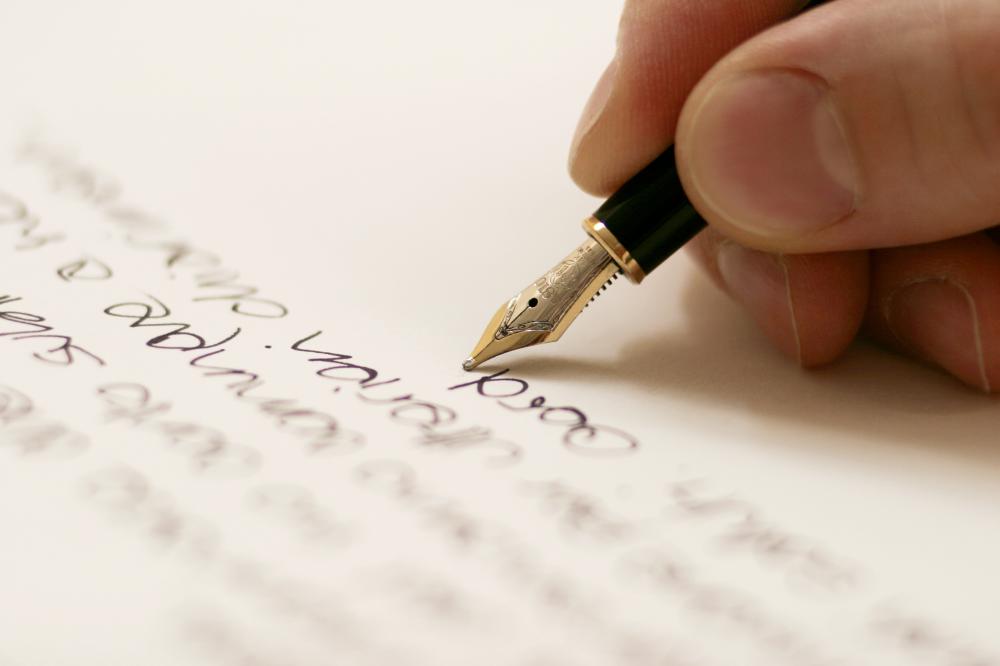
To you, the one sitting in front of the keyboard. The one squinting at your bright-ass screen at three o'clock in the morning, wondering if you used the word 'perfunctory' in the right context. The one meticulously combing through your prose with your fingertip pressed against the somewhat smudged screen. The one determined to force another chapter out of your aching skull before you can finally drop to the pillow and go to sleep because your day job wants you there early the next morning. The one dragging yourself to something you're good at, something you've probably always been good at, but isn't your one true love like writing is, but you do it anyway because it pays the bills. The one who listens to conversations not because you want to be nosy, but because it might be something useful or interesting for your writing.
To you, the one searching desperately for a writing community, but your town is too small to have one. The one scrolling through Google trying to find a forum with other writers because you're hungry for people talking and laughing and moaning about the same writer habits that you have. The one fretting over the fact that no one's replied to your comment and you worry that you're annoying everyone and you'll never connect with them.
To you, the one who is doing well enough but not quite where you wanted to be with your writing. The one desperately hoping that you're actually good at telling a story and it's not just your friends and family humoring you. The one who quietly does the research, compiles lists and facts, calls people to ask them weird questions, and tries to compact it all into the story in a way that makes sense. The one scouring every inch of Tvtropes and Tumblr to make sure you're not accidentally employing a cliche that will make future readers hate you. The one who diligently makes mental notes of things you love in films you watch, books you read, comics and graphic novels you flip through, and television shows you obsess over, and also marks the things you hate that they do.
To you, the one who secretly daydreams about being interviewed on the Colbert Report even though your book is fiction and would probably have nothing to do with political satire. The one sitting in the middle row at a comic book or anime convention wishing it were you up there with hundreds, or hell even dozens, of adoring fans all dying to hear any tiny anecdote of your life. The one sighing wistfully as you read adorable behind the scenes stories about your favorite actors, or watch their blooper reels, and praying that someday your book will help you climb out of your shell and become someone other people can root for.
To you, the one who finally makes it to the mountaintop, looks down at the world below you, and openly admits that you're scared shitless. The one who bites your lip as you stare miserably at your rank on Amazon. The one who lays in bed listening to Aqualung and Dashboard Confessional and Death Cab for Cutie and worrying you'll never amount to anything. The one who picks through your various social media personas and ponders why you seem unable to get through to anyone, or at least it seems that way, the way that others do. The one who is terrified of being mediocre, or worse, so terrible that you are instantly wiped from the memories of anyone who knew you because your work isn't that good, it's just okay, and okay only cuts it when it's mass-produced by a corporation or the government. The one who sweats and bleeds writing and loves it to your core like a family member and couldn't stop even if you were banned from the entire Internet itself.
You.
You are not alone.
Your dreams are not empty. Your words are not poison. You are something special. Maybe you're not Shakespeare or Stephen King or Dean Koontz but you are doing something worthwhile if only because you give a damn about your writing. Even if it doesn't soar off the bookshelves, even if you never crack the Amazon 100 Bestsellers, even if you get no reviews, no ratings, no nothing, you are still worth something. You are an author. You tell stories. You breathe legends. You have power beyond measure, even if it's only in your mind and your Word document.
To you, starving artists.
You deserve better than what you settle for. Don't give up. The world will always need stories.
Tell them.
And tell them without permission, reluctance, or restraint.
-Kyoko
Subscribe to:
Posts (Atom)